UAE eInvoicing is Coming — Is Your Business Ready?
Managing invoices manually has always carried risk — but in the UAE’s rapidly evolving regulatory landscape, those risks are about to become compliance failures. The UAE government is rolling out a mandatory Electronic Invoicing System (EIS), and businesses that aren’t prepared will face operational disruption when the deadlines arrive.
If your business is currently relying on PDFs, Excel sheets, or email-based invoicing, now is the time to act. Here’s a clear breakdown of what UAE eInvoicing means, who it affects, and what you should be doing right now.
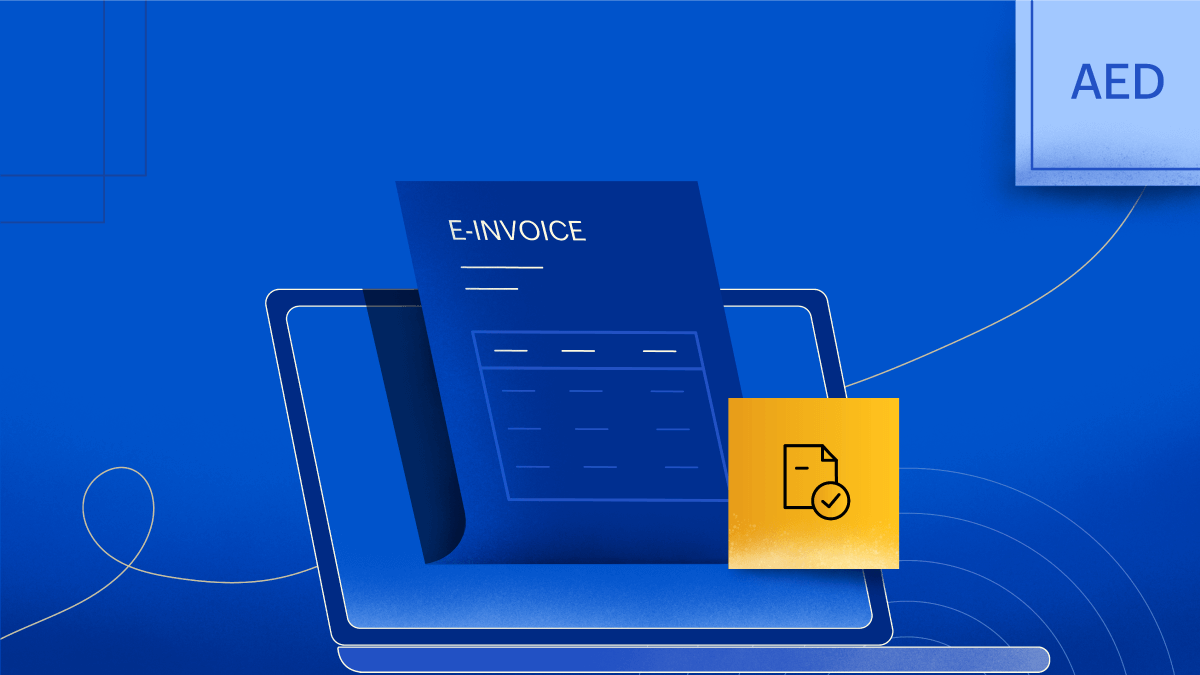
What Exactly Is eInvoicing?
eInvoicing is not simply sending a PDF invoice by email. A true eInvoice is created, transmitted, and stored in a structured digital format — such as XML or JSON — that complies with government standards and can be read automatically by machines without human entry.
The UAE’s eInvoicing system operates through a model called Decentralised Continuous Transaction Control and Exchange (DCTCE). Under this system, invoices flow from supplier to buyer through Accredited Service Providers (ASPs) via the Peppol network — a globally recognised secure infrastructure for electronic document exchange.
Who Does It Affect and When?
The rollout is phased, so the deadline that applies to your business depends on your revenue:
✓ Businesses with revenue ≥ AED 50 million — mandatory from 1 January 2027 (ASP appointment deadline: 31 July 2026)
✓ Businesses with revenue < AED 50 million — mandatory from 1 July 2027 (ASP appointment deadline: 31 March 2027)
✓ UAE Government Entities — mandatory from 1 October 2027
Voluntary adoption is open to any business from 1 July 2026 — and getting ahead of the mandate is strongly advisable.
The standard of financial compliance
The benefits of eInvoicing go well beyond regulatory compliance. Businesses that implement it early gain a real operational advantage — faster payment cycles, lower processing costs, and far fewer invoice errors. The UAE Ministry of Finance estimates invoicing costs can be reduced by up to 66% through eInvoicing adoption. Automated invoice generation reduces human error, accelerates approvals, and gives finance teams real-time visibility into cash flow.
For businesses currently managing invoices manually or through disconnected tools, this is also an opportunity to consolidate. Platforms like Zoho Books are already working toward UAE eInvoicing accreditation, meaning businesses already using Zoho can transition without changing their core financial software.
Professional compliance, powerful results
The key to a smooth transition is starting early. Review your current invoicing workflow and identify where manual steps still exist. Assess whether your accounting software can generate structured eInvoices in the required format and connect to an Accredited Service Provider. Train your finance team on the new process before the deadline — not after. Businesses that treat eInvoicing as a project to complete in the final weeks before the mandate will face the most disruption.
At Forzateks, we help businesses implement and configure Zoho Books as part of a fully connected financial ecosystem — including preparation for UAE eInvoicing compliance. If you’re unsure where your business stands, get in touch and we’ll help you assess your readiness.
✓ eInvoicing mandatory for B2B and B2G by mid-2026 onwards depending on revenue
✓ Structured XML/JSON format required PDFs do not qualify
✓ Must be transmitted via an Accredited Service Provider on the Peppol network
Ready to get your finance systems eInvoicing-ready?
Post Tags :
Share :